
01
Identification
Describe the issuer, denomination, series, date and recognised varieties. A catalogue reference is a starting point for research, not a guarantee of authenticity.
Identification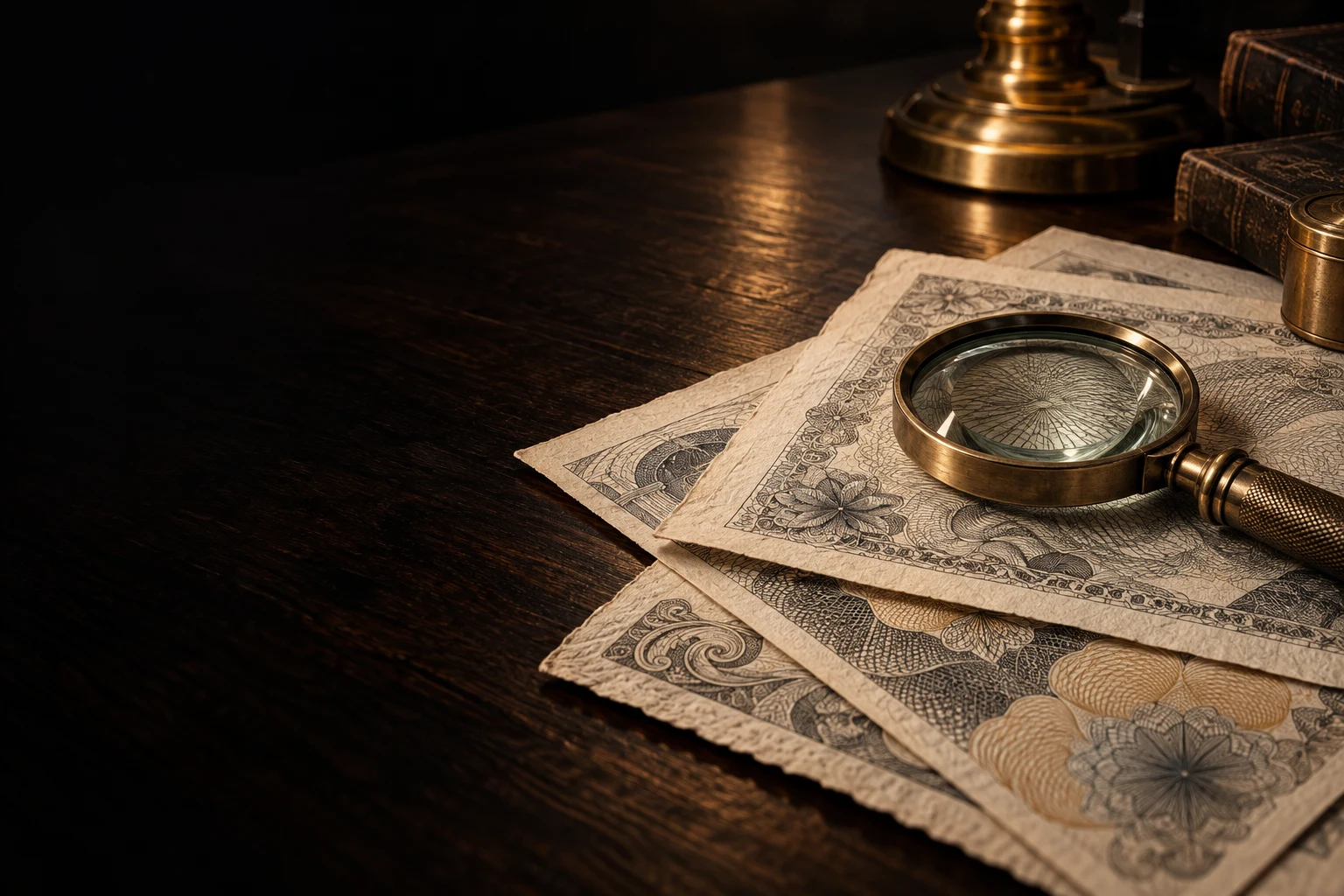
Independent numismatics · Physical collectable banknotes
History. Craft. Understanding.
The art and science of understanding banknotes.
Collectable banknotes: identification, condition and numismatic documentation.
Project in preparation. Services are not yet available for contracting. Requests and certificate issuance are disabled.
AI-generated editorial illustration. Not an examined or certified banknote.
Banknote Money is a proposed independent numismatic service for physical collectable banknotes: identification, authenticity examination, condition assessment and documentation.
Banknote Money is not a bank and does not offer banking or financial services. No deposits, customer money accounts or funds custody, lending, payment services, currency exchange, investments, cryptoassets, NFTs or tokenisation are planned. Revenue will come only from numismatic service fees.
“Banknote” describes the physical collectable object we study.
Banknote Money is an independent private project. It is not part of, does not represent and does not act on behalf of any government, central bank, public authority or financial regulator, in the United Kingdom or anywhere else in the world.
Planned reports and certificates are private numismatic assessments. They do not represent approval by a central bank, public authority or financial regulator.
01 · A material history
Understanding a banknote goes beyond recognising its country and face value. It brings together issue references, observations of the specimen and a record of what can—and cannot yet—be concluded. Banknote Money organises these subjects to support a more informed reading of paper money.
We have a highly specialised team in numismatics, dedicated to the study, analysis and documentation of collectible banknotes.
About Banknote MoneyIdentification, examination and documentation bring complementary perspectives to the same specimen.
01
Describe the issuer, denomination, series, date and recognised varieties. A catalogue reference is a starting point for research, not a guarantee of authenticity.
Identification02
Observe the physical characteristics of a note, its printing, substrate and visible security elements. Findings require context and an appropriate examination.
Examination and assessment03
Create a clear descriptive record that distinguishes observations, reference material, interpretation and unresolved questions.
Numismatic documentationThe world of banknotes
Explore the materials, periods and purposes that make banknotes such distinctive objects. The gallery is educational; it is not an inventory of Banknote Money holdings.
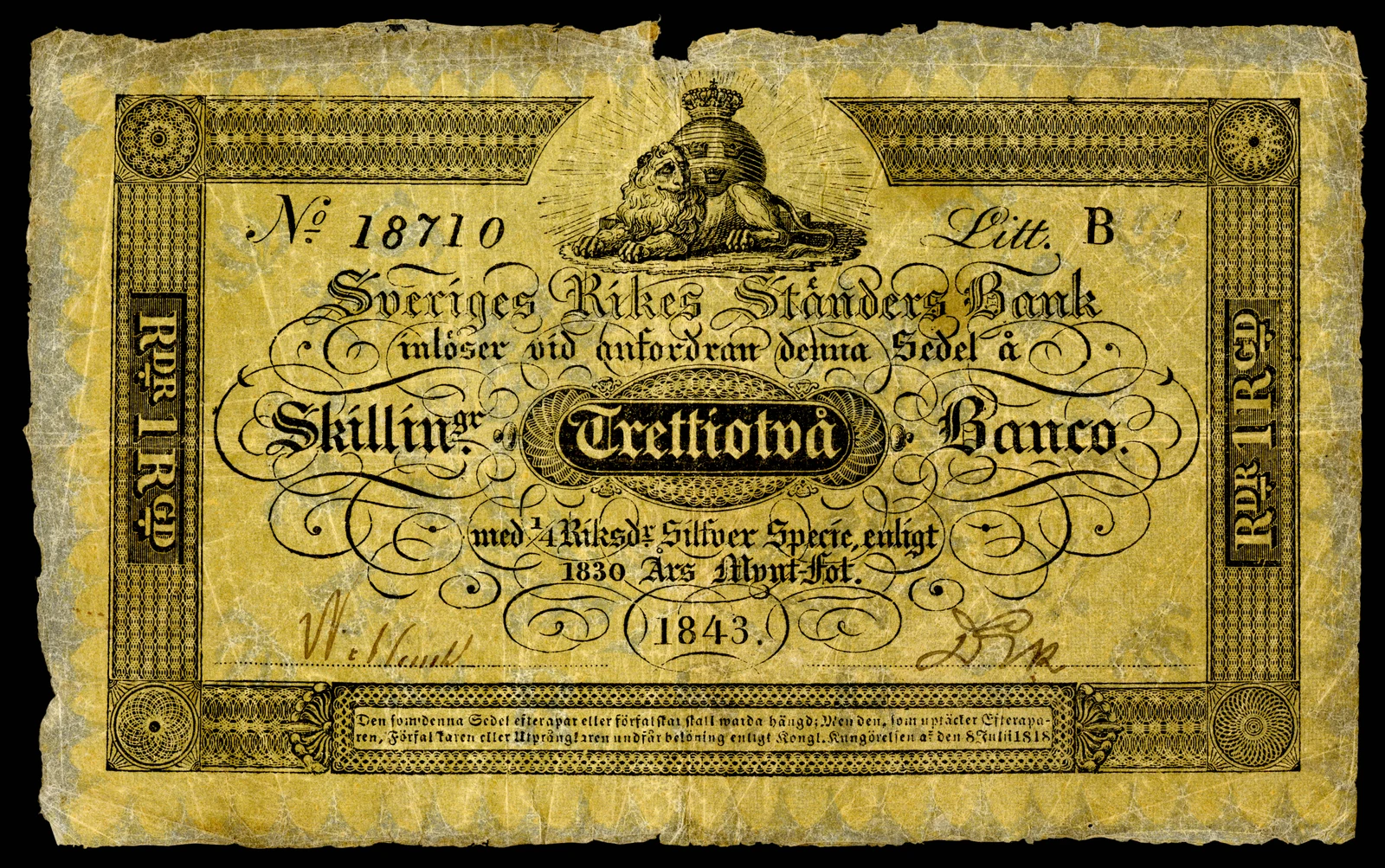
Historical
Historical issues can illuminate changes in design, production and public life. Dating, issuer and local context matter as much as visual appeal.
External collection photograph for education. No examination, ownership or endorsement by Banknote Money is implied.
Contemporary
Recent issues combine graphic design with changing materials and security techniques. Features must be read against the correct issuer and series.
AI-generated editorial illustration. Not an examined or certified banknote.
Polymer
Some issues use polymer and incorporate transparent areas or optical features. Not every polymer note uses the same construction; a photograph alone cannot establish its identity or authenticity.
AI-generated editorial illustration. Not an examined or certified banknote.
Paper
Paper banknotes may use cotton-based or other substrates. Texture, printing and condition must be considered together rather than treated as a single decisive test.
External collection photograph for education. No examination, ownership or endorsement by Banknote Money is implied.
Commemorative
Commemorative issues may mark an anniversary or a cultural event. The occasion, release context and documented characteristics should be distinguished from claims of rarity or future value.
AI-generated editorial illustration. Not an examined or certified banknote.
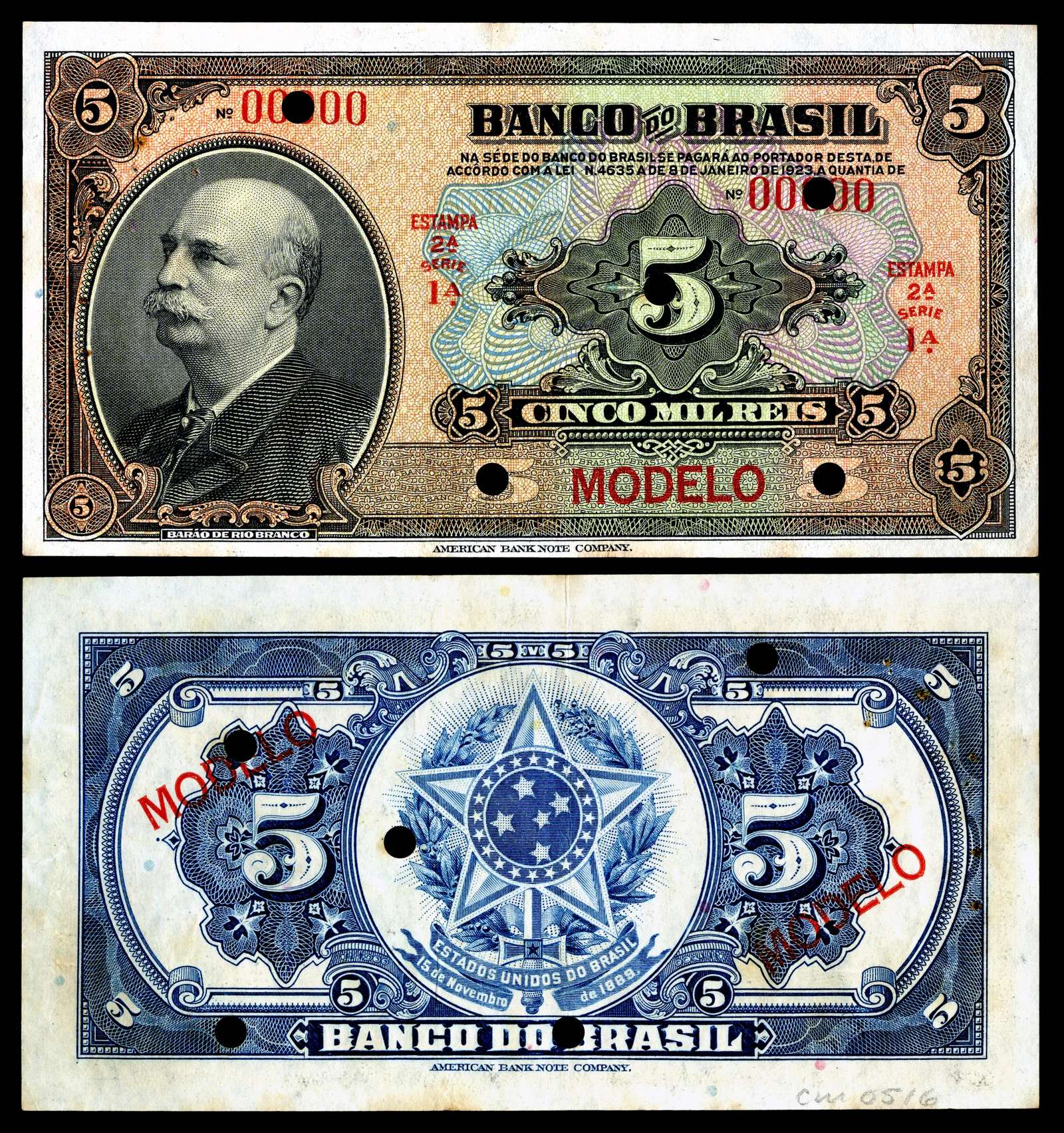
Collectible
A variety, a provenance or a production characteristic may attract collectors. Scarcity and market price need their own evidence; neither is guaranteed by appearance.
External collection photograph for education. No examination, ownership or endorsement by Banknote Money is implied.
Category illustrations are not authenticated specimens. Historical photographs and illustrative compositions are identified separately.
Physical banknotesAnatomy of a banknote
A visual guide to features encountered across different issues. No single feature authenticates every banknote; countries, series and historical periods differ.
Engraving, intaglio, lithography and other techniques leave different visual and tactile characteristics.
Threads, optical devices and transparent areas occur in some issues. Refer to the issuer’s guidance for that specific note.
A serial can help describe a specimen or variety. It is not, by itself, proof of authenticity.
A watermark may be part of the substrate. Its presence, form and position vary between issues.
Very small lettering appears on certain notes; a screen image cannot substitute for appropriate examination.
Paper and polymer respond differently to handling, ageing and examination. Material must be identified in context.
04 · The analysis process
A clear sequence connects identification, physical observations, research, documentation and technical review.
Establish the proposed attribution and reference material.
Observe the physical characteristics of a note, its printing, substrate and visible security elements. Findings require context and an appropriate examination.
Describe handling, folds, surface changes and visible damage.
Separate direct observations from interpretation and limitations.
A private report records the specimen, examination scope, observations, references, conclusion and technical review.
Clear scope. Recorded evidence. Traceable review.
Condition & conservation
Collectors use a range of grading conventions. Descriptions are not interchangeable across every organisation, and a grade is neither an authenticity guarantee nor a valuation.
Commonly describes a note without evidence of circulation; handling, manufacture and paper originality require separate attention.
Generally indicates limited circulation with some folds or handling. The precise threshold depends on the standard used.
Usually describes more evident handling and folds while much of the original detail remains readable.
Typically indicates more sustained circulation and wear. Damage, repairs and alterations still need to be described separately.
Condition descriptions record handling, folds, wear and alterations. Conservation treatment requires advice appropriate to the actual object.
Condition and conservation06 · Documentation
Numismatic documentation brings together identification, observations, references and a reasoned conclusion.
An observation deserves context. A conclusion requires evidence.
Clear scope. Recorded evidence. Traceable review.
Private certificationBanknotes of the world
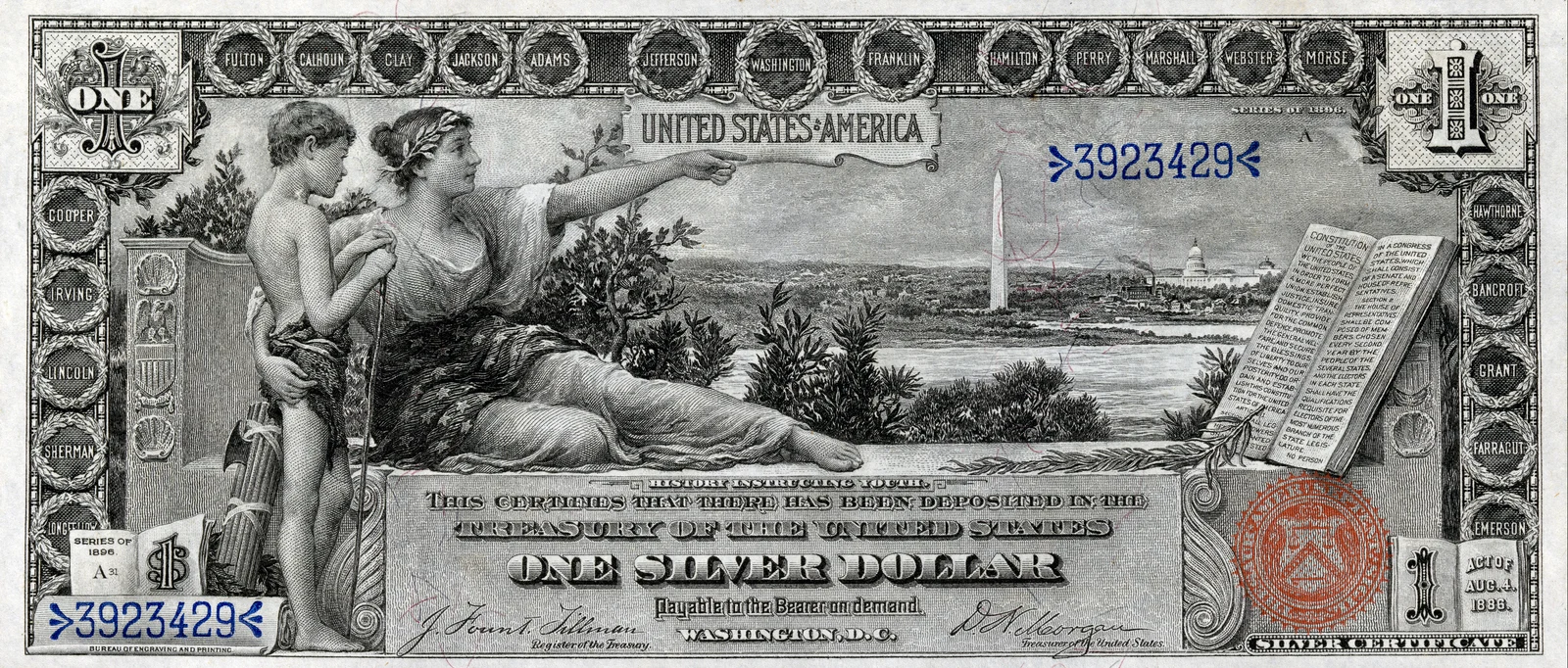
From engraved allegories to type, colour and material innovation, banknotes reflect different artistic and production traditions. The examples below are external collection references, not an owned or client collection.
Engraving and national narratives offer a starting point for studying historical issues.
Changes in issuers, denominations and design can be read alongside the histories of the places concerned.
Scripts, imagery and production traditions invite comparative research. Each attribution requires its own sources.
08 · Independence & transparency
Banknote Money is dedicated to physical collectible banknotes and numismatic knowledge.
Evidence, identified sources and clear responsibilities guide the presentation of every conclusion.
Institutional information09 · FAQ
No. Identifying an issue differs from authenticating a particular specimen. A conclusion needs an appropriate examination scope and evidence.
No. Condition describes the specimen. Commercial valuation answers a different question, with its own purpose and dated references.
Not always. Images can support preliminary identification and visible observations, but some physical characteristics need other examination.
It records a request when that function is available. It is not professional approval, confirmed authenticity or an issued certificate.
It retrieves a record when lookup is available. The document, current version and specimen still need to be matched; reading a code alone is insufficient.
Do not send objects without specific instructions and prior acceptance. Receipt and return conditions must be confirmed for the requested service.
Educational sources and image credits imply no affiliation, partnership or endorsement. Any institutional relationship needs documented support.
Educational reading is available. This site does not currently accept commercial orders or physical submissions and does not issue professional certificates.
No. Face value is the denomination printed on the note. It does not establish the price or collectable value of a particular specimen.
No. Mintage concerns production of an issue; a graded population counts records within a particular grading system. Neither is automatically the surviving number.
Check its version and current status. Corrections or invalidations should retain a traceable relationship to previous records rather than silently erase the history.
BANKNOTE MONEY
Explore banknotes, their characteristics and the analysis process.

